As part of my FMP work I have completed an essay which explores my thoughts on the work I am producing and the context behind it.
Pandemonium II
As someone who is growing up aspiring to become architect and designer I investigated and thought about the future image I will want to represent one day, not only as I will have the ability to create buildings and products that are integrated into life but also ones that define the way we live. From this and my current education I feel that the products and designs that we produce are to reinforce our need for function and efficiency. The need to produce products designed to make our busy lives easier and quicker. I dislike this attitude towards design. Even products designed to look “aesthetic” are made to live up to our perfect expectation on life and to cover and hide our true selves, one of laziness and desire for an environment which contributes as little effort or struggle as possible. Sometimes I feel that form and function are as simple as black and white and are treated that way. That form is designed to please us and shield us from the reality of the function. From this I tend to draw closely to design that uses its function as a visual aesthetic.
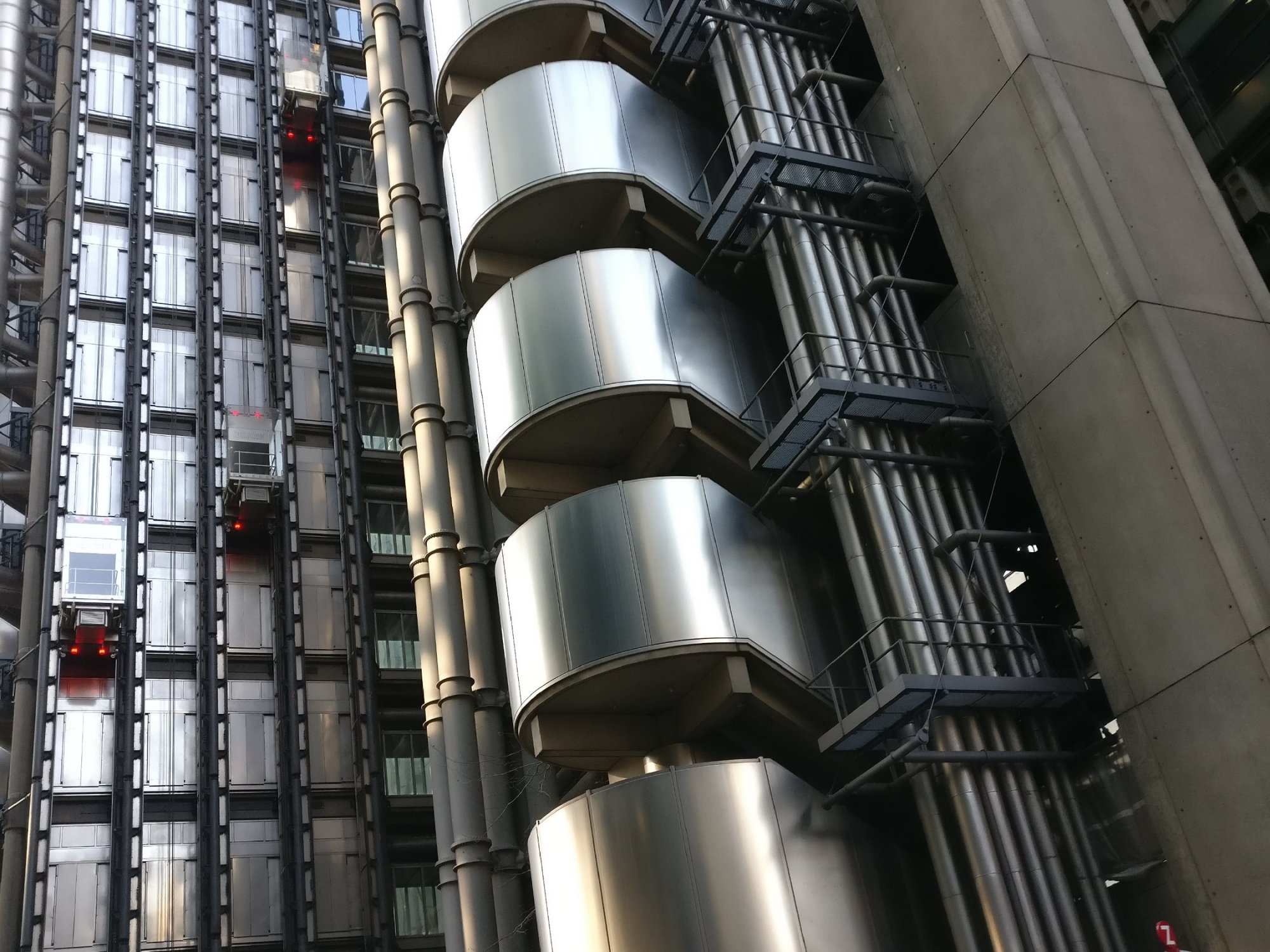
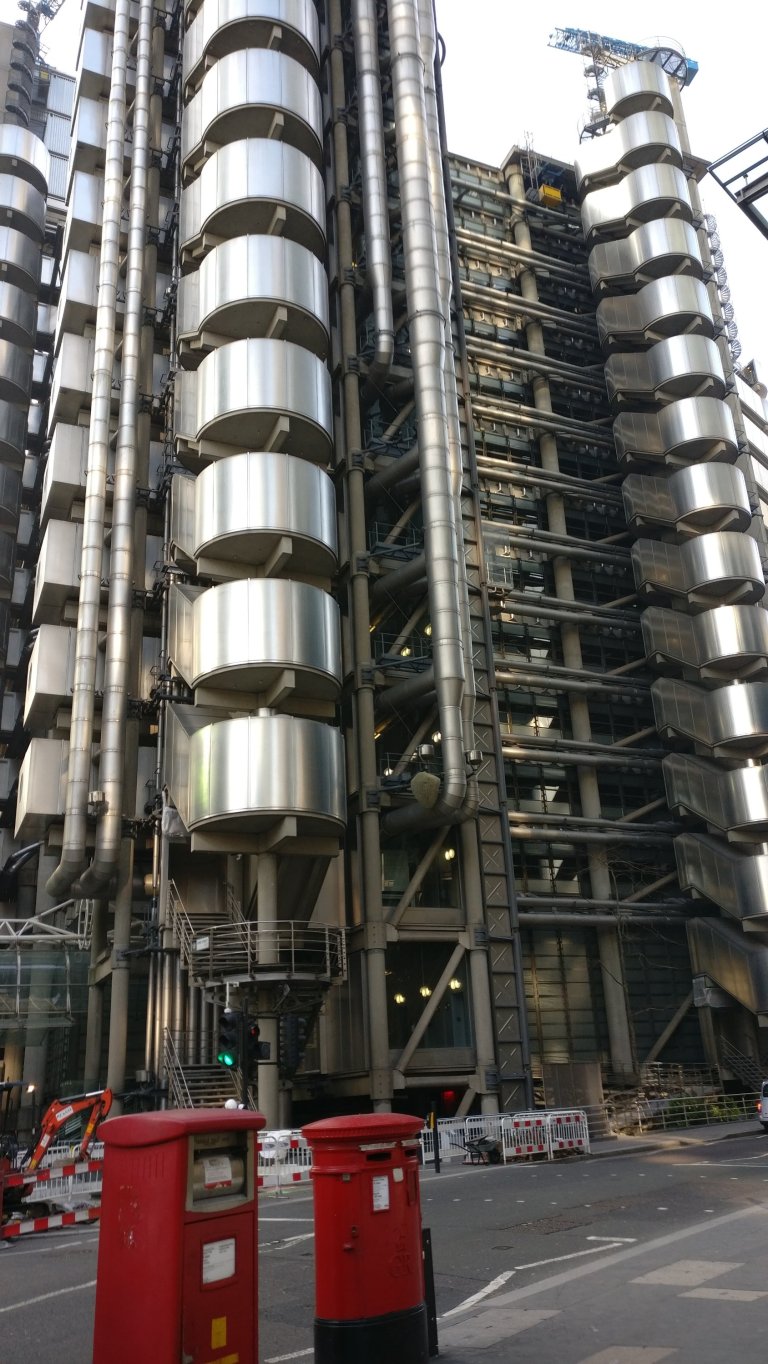
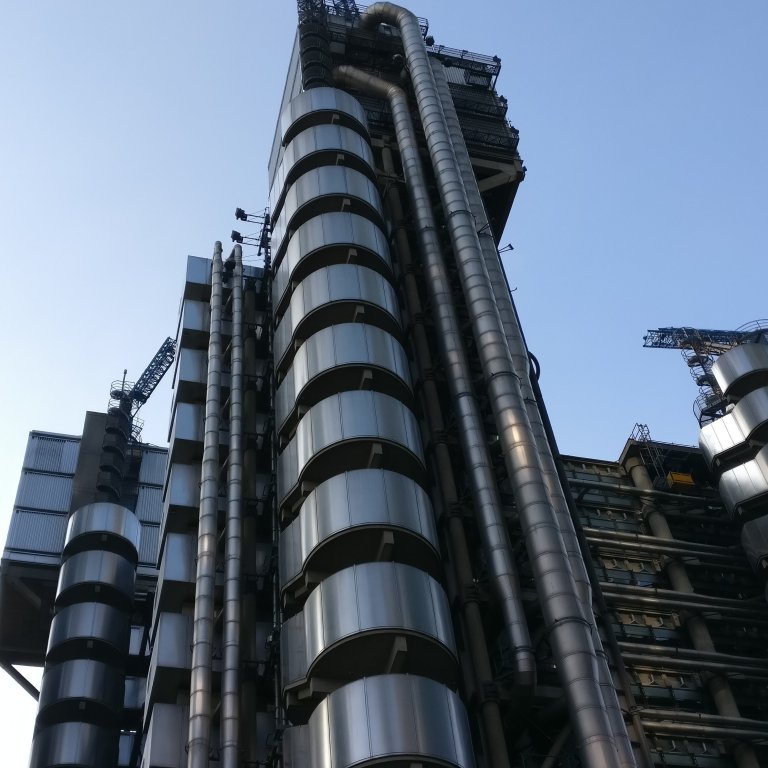
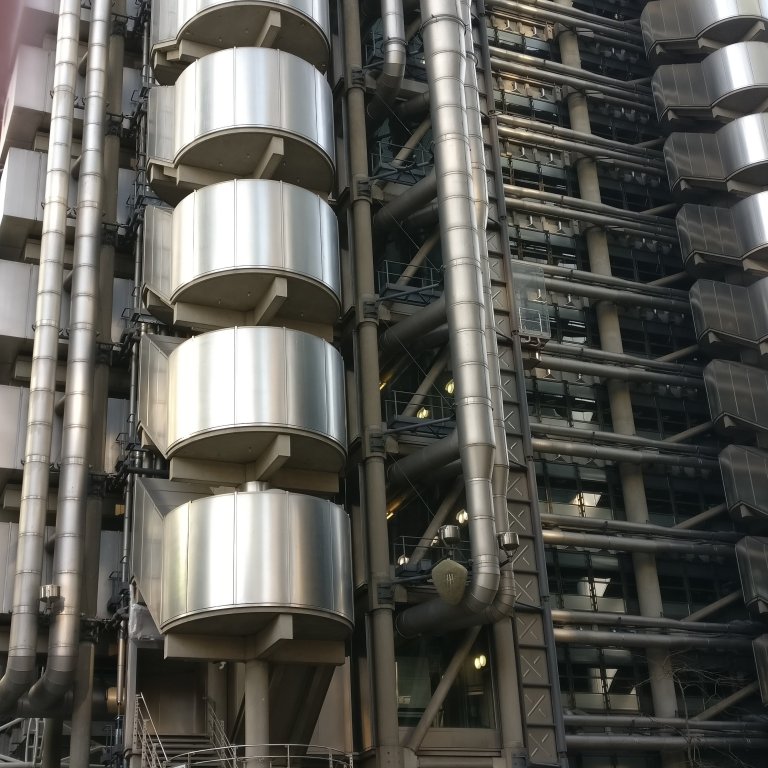
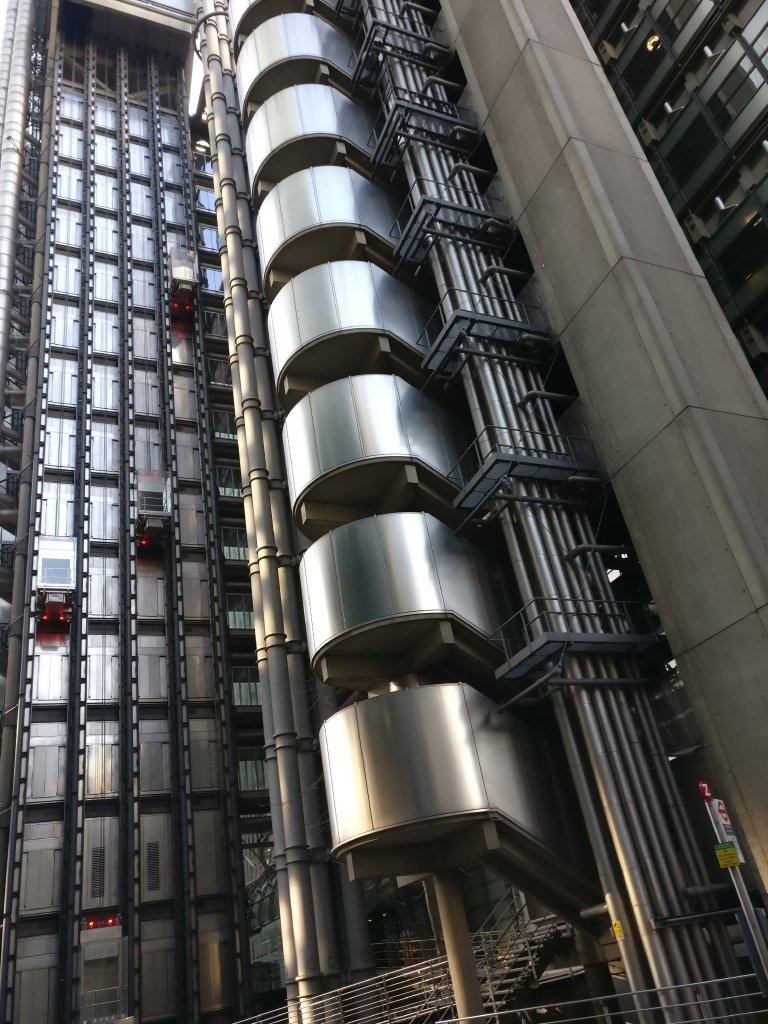
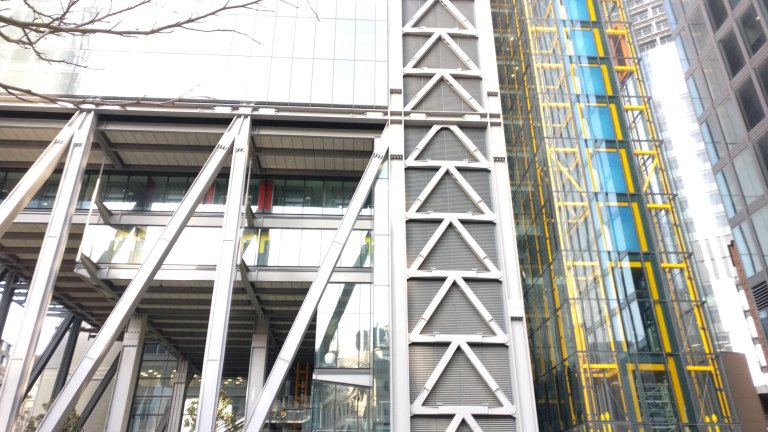
To start on my FMP, I visited the Lloyds “inside out” building. It expresses every functional detail and uses no effort to cover it. Every shape and structure is for a purpose. Due to its honesty as a building many people see it as “ugly” as it is not covered in cladding or plaster. I like to see this as a rebellious act against the ideology of modern design. This rebelliousness to peoples demand for a perfectly painted world also strengthens my love for brutalist architecture. The structures that come from brutalism are so raw that it almost disgusts people. Its shapes and forms draw from its use of industrial materials and large dense shape. Born from the heavy use of concrete as almost as I see it an act against the optimistic architecture of the time; a display of seriousness and reality. This I sympathise with. I don’t see the emotions that come from this type of architecture as negative but more powerful. I share the same philosophy that comes with brutalism, I love the pessimism and destructive nature that it brings. I think that it is the most down to earth and honest architecture can be. From this I have learnt that the way that we live our life must be defined by the buildings we live in. As humans we design around our desire to be lazy. If we create things based upon our functions, we create a world which is filled with the dirty brutalism and metallic harsh forms. In our dislike for such forms we hide behind the addition of aesthetics which almost seems like a lie. From this was the start of my design process for my FMP. I realised that to design by my morals one of two things must happen.
Firstly, I must realise the destructive and raw side of our function and not hide behind the desire for things to look clean. Personally, I love to embrace this dark side of how we live. Taking the truthfulness of how we live and applying it to a structure. Creating a piece of work that communicates this idea would be ideal. A form that advertises the methods that humans live by, one that is not seen normally. Taking items and just displaying their raw functionality.
Secondly, I wish to design with form first, in the idea that we embrace the world as something emotional and redefine the way our lives with form much more prominent so to change our greed and push away the laziness that our functional life brings. Create buildings that don’t just serve as a place to live but more of a piece of art that is useable. Architecture is a slight different art from something like a painting or film. It is integrated within reality and the way humans interact with the world and survive. Firstly, making it subject to our needs and demands from a survival sense. As an architect I will not be able to change the fact that buildings must serve their purpose however moulding building and sculpture together as much as possible will take away from the use of aesthetics to please and mask its function pushing visually a space which has emotion and meaning at its core rather than a place that is efficient at making people happy with an easily liveable space.
This gave me the question early on within my FMP. Would I go out my way to live in a space which is harder to live in but more driven as a sculptural piece? Personally yes, I see this as a method to which I can surround myself with emotion and live more as a visual experience. I would perhaps have to put more effort into my life for completing tasks that would not be refined towards a productive life, but I see this as not a negative aspect but as part of the experience.
This got me interested with the philosophy behind le Corbusier. Creating not only a building but a way of life. With small corridors and an open roof, the building was designed to live up to newer modern methodology of life and expectations. The house was designed to be elevated and immersed with the sky and not with the ground. An open roof for bathing in the sun and surrounded by blues and not the dirty and dense earth. Very different form an outside grass space like a garden. With large windows every aspect of this building is designed to break away from the heavy solid forms of existing architecture and push the modernistic simplicity and forms into a bright sky and clean environment. With the addition of a bath space at the entrance to wash yourself before entering, the space has created a clinical and new way of living. I agree with some aspects of how the modernistic philosophy especially of Le Corbusier; defining the way we live with architecture however I think it created an image of how we wish to live and conduct ourselves but seems to shut away the dirty and darker side of life behind white walls making feel very inhuman. The exact reason I sympathise with brutalism.
From this I felt that my FMP project needed to communicate the destructive nature of humans and there very functional lives. Highlighting the aspects which are not covered up. For this I chose to return to my study of oil rigs. Personally, I feel that an oil rig as a structure is the most truthful and honest. Everything that is placed upon it is there for a reason. With no expense for aesthetics or forms. Designed for a very brutal purpose and with every aspect engineered. This leads me to consider it a creation of pure human greed and destruction. Knowingly created to serve our demands, and from that I see its complexity and mechanisms ironically and incredibly more human than any other structure and therefore in my mind incredibly beautiful. Because of this I decided to use the forms of an oil rig as a demonstration. And therefore, for an FPM project use it as an advertisement which highlights the nature of such forms due to the fact they are not considered enough within life, especially as a source of electricity and resource. We live our lives hidden from this aspect because most people consider it ugly and do not wish to think about the truth of it or any aspects of how they live, exactly the reason they are masked with the well-designed image of their lives.
My FMP has allowed me to express this idea into a form of rebellion against the current ideology we live by. I will create and develop the idea of using an oilrig as a symbol of this. Especially due to the environmental impacts of the structure as well. During my research I chose to investigate the environmental and sustainability areas of our current life. From this unicef have published 17 goals to reach by 2030. Under this comes a sustainable economy zero poverty and hunger; and equality for all. These goals are on the face of it a reachable aim but deeper down clearly something that is unreachable. I found it funny to the extent to which we try to comfort ourselves with targets and aims which make us happy and give us a sense of security. These goals strengthened my belief that people cannot face the reality of human life. From this giving me more incentive to express the environmental impacts and social impacts of our life, using the image of an oil rig as a catalyst to do so making the image an understandable and raw one.
Like the creation of a rig itself the process of building even a model can prove difficult. For my personal project I wish to abuse the ability to use large scale. By creating a piece of work that is on a large scale upward of two meters tall will add to its chaotic nature by becoming more visually dominant in the space and therefore a more prominent source. This is met with the large scale upon actual oil rigs. The ocean also gives a contrasting view which meets well with the image of an oil rig. Being something organic and fluid in form yet rough and harsh. A direct enemy to the oil rig and something that is taken into consideration within its engineering. This creates a black and white contrast of nature against human and adds to the effect of our actions against the planet.
.
When designing such a structure there are many things to take into consideration. The process of making a sculpture like this is also, for me part of the art especially as it ties into similar aspects to if I were to be designing an actual oil rig. Because of this the process of making the object is also to be in its self an act of creating destruction. I received some practical issues when designing. Firstly, on this scale finding a material that was cost effective proved problematic. Original ideas were to make such structure out of metal or pvc pipe however this would have proved to be expensive. Through this development I came to using chicken wire as a base for creating structure. However, the downside to chicken wire was its lack of regularity. It became fluid in nature and almost organic. Originally this is not what I wanted to display. Regularity was important to communicate its structure and over engineered solid forms. Yet the more I worked with the wire I realised that an organic softer form makes the structure look even more human than before. It took a twist upon people perception of how the oil rig should look. It almost starts to look like it’s made from flesh. This I feel makes people consider the structure as something alive and something that is personified as a destructive plague growing and moving. I chose to compliment this look and apply boundaries to the form by building it within a box. From this the form would creep out of the box overgrowing its limitations and therefore applying the feel that the form is out of control and self-propelling.
Chicken wire proved a more cost-effective method. From this I had the ability to wrap it. I feel its colour should be as dark and unclean as oil rigs tend to be. The use of oil was also important within my designs. A product of human consumption and the pinnacle of the chaotic and dirty power that we use especially within a capitalist and financially driven society. I see oil as a symbol that ties in with the world that people don’t want to be tied in with. Its dark colour and hellish toxicity, flammability and viscosity work beautifully as a metaphor and as a substance a huge part of the message I wish to convey. As humans we are reaching for a substance which is so negative in colour and form, our greed to retrieve something so hellish says something about our morals in doing so. Therefore, the visual image of oil was needed within my form. So, I chose to cover my chicken wire with black tape firstly its slick black surface has large links to the visual language that oil gives off. Secondly for me tape give me images of restriction and authority both qualities that ties in with the capitalist domination that comes with the building of oil rigs. In covering the wire in such a form, I feel like the undercover structure is hidden and cut off from view. Much like the dirty and corrupt methods that the companies that run such oil rigs carry out.
Overall from my audience I wish to at least suggest that the world is functioning on a much more destructive and damaging level visually and environmentally.
During the construction process there was thoughts about making my sculpture interactive and immersive. Some feedback thought it would be good to walk inside and be surrounded by the structure. To me this seemed counter intuitive. Part of the symbolism Was tied to the fact that people are very distant from such a world; hidden from it. I took to the identity of the rig as something that is observable but unreachable and distant yet a display of direct consequence upon the observer’s actions. By allowing audience to walk inside it and touch it you are breaking that barrier of distance and separation which their consequences. Connecting it with their actions. This in turn connects the two worlds separated by people’s blindness to see bigger pictures their lies covered by optimism, yet worlds directly connected by only greed. These two worlds are separate entities and should only be observable. The purpose of the work to make the audience more aware of the other world however not disregard it yet embrace it as a way of life. Rather religiously as almost an act of sin. From that one should go on to live in acceptance of it. As a more destructive and functional world but moreover, from there gain atonement and live in a more form focused and emotionally driven way of life. In this and only then is that barrier of blindness and mask of optimism removed. In the current state people are not allowed to be immersed within the piece.
In conclusion, I see this essay as a connection between my philosophy towards architecture and design, currently within the world and the message I wish to communicate because of it within my work. This essay also acts as a description to why I chose some major design choices and my methodology of thought behind them. I also use this as a tool to provide clarity within my own thoughts and therefore act upon the ideas I have more efficiently. It has evolved my understanding upon my work and how it links with my inspirations contextually.
In my essay I mentioned a trip to the lloyds Bank inside out building. On this trip I took some pictures which you can see here.
 William Guare Portfolio